Buyer's GuideJuly 20266 min read
The indoor sauna buyer's guide: turning a spare room into a hot room
Basement, bathroom, or garage — an indoor sauna is the one you'll use most because it's closest. What it takes to build one right: waterproofing, ventilation, and a hardwired heater.

Indoor saunas are standard in Finland for a reason: when the heat is a few steps away, you use it constantly. That proximity is precisely what the cohort research rewards. Building one indoors is very doable — the constraints are waterproofing, ventilation, and a hardwired circuit, not square footage.
Where it can go
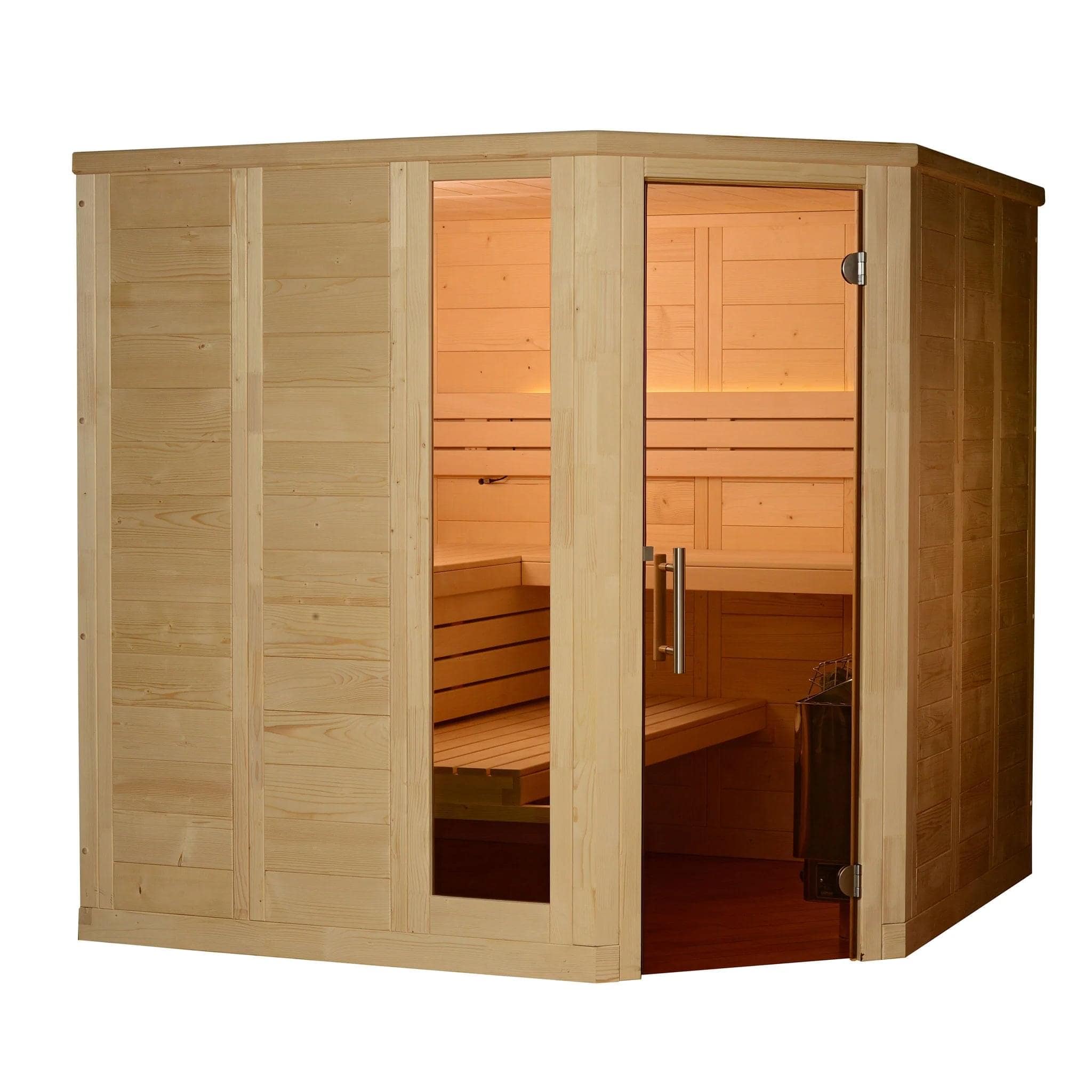
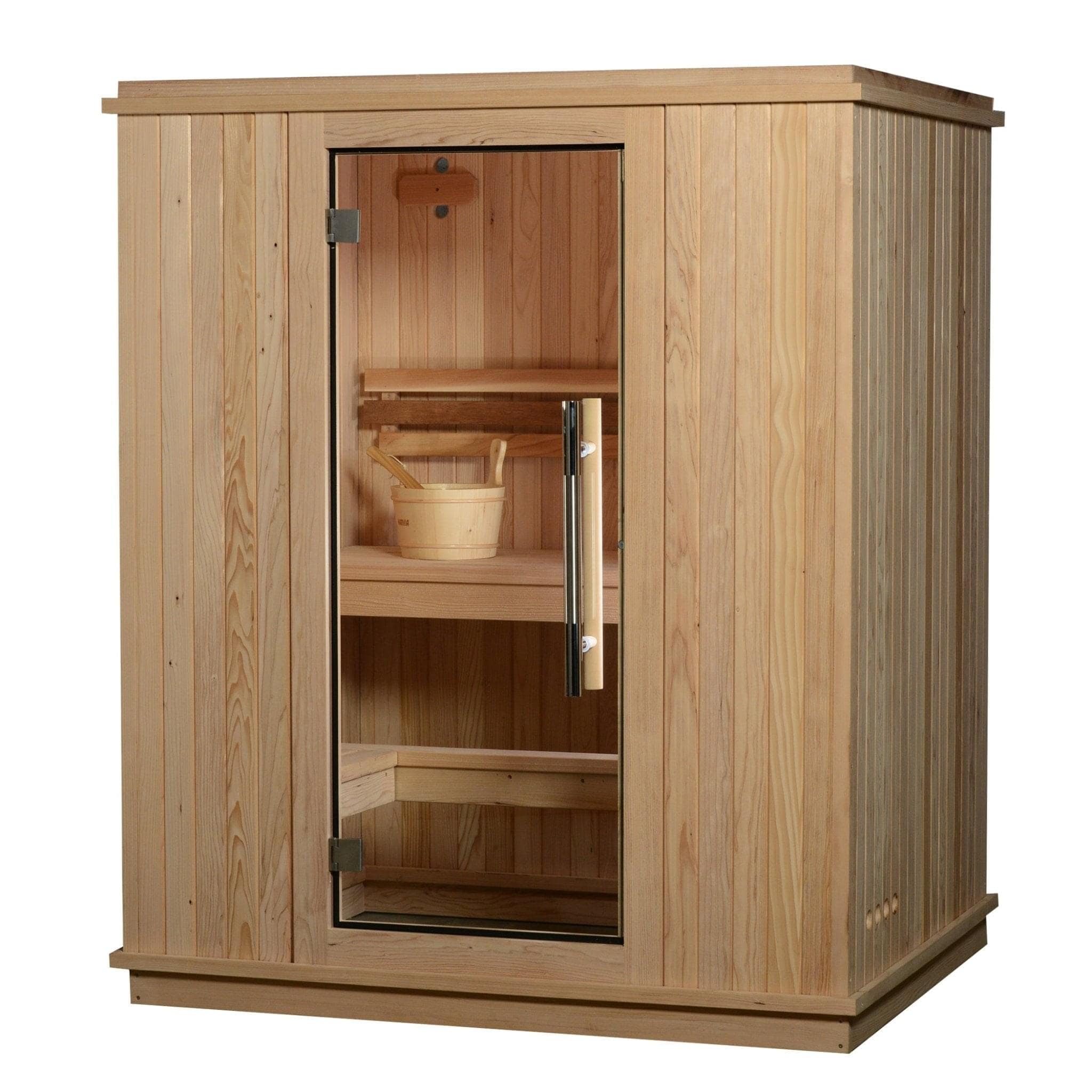
A basement corner, a large bathroom, a garage, or a converted closet all work. You need a waterproofed floor (tile or a purpose-made sauna pan), a proper vapor barrier behind the paneling, and low-and-high ventilation for air exchange. Pre-cut kits arrive as wall sections that assemble over a weekend.
The heater and the circuit
Traditional indoor rooms use an electric hot-rock heater sized to the room volume, on a dedicated 240V circuit run by an electrician. Match the kilowatts to the space (about 1 kW per 45 cubic feet) so you can reliably reach 80°C+.


Common questions
- Will an indoor sauna damage my house with moisture?
- Not if it's built correctly. A traditional sauna is surprisingly low-humidity most of the time (löyly is intermittent), but you still need a vapor barrier behind the cladding, a waterproof floor, and proper ventilation. Done to spec, indoor saunas are completely standard and safe.
Sources
- Sauna Bathing and Incident Hypertension: A Prospective Cohort Study · American Journal of Hypertension (2017)
- Association Between Sauna Bathing and Fatal Cardiovascular and All-Cause Mortality Events · JAMA Internal Medicine (2015)
- NFPA 70: National Electrical Code (NEC) · National Fire Protection Association (2023)
Read next
Heaters & Stoves
How to size a sauna heater (and why tower heaters make better steam)
The heater is the engine, and kilowatts-to-volume is the spec most buyers get wrong. Get it right and 90°C is easy; get it wrong and you've built a warm box.
ReadOutdoor Saunas
Before you buy: backyard sauna permits, pads, and 240V wiring
The sauna is the easy part. The pad it sits on, the permit it may need, and the 240V circuit that feeds it are what actually determine your timeline and total cost.
ReadInfrared Saunas
Infrared vs. traditional sauna: which one should you actually buy?
Traditional saunas have the 20-year health data. Infrared has the plug-in convenience. Which one belongs in your home comes down to three honest questions.
Read